How Much Protein Do Women Over 35 Need? A Practical Guide to 100–120g Per Day
If you’ve been told to “eat more protein” lately, you’re not alone. Many women over 35, especially those navigating perimenopause, are hearing this recommendation more often. But the key questions remain: how much protein do women need daily, and why does it matter more during this stage of life?
At Moore Wellness Solutions, we often guide patients toward a protein intake of approximately 100–120 grams per day (individualized based on goals, body composition, and activity level). This range helps support muscle preservation during weight loss, metabolic health, and overall wellness through midlife and beyond.
Why Protein Needs Increase After Age 35
Hormonal shifts during perimenopause affect body composition, metabolism, and energy regulation. As testosterone and estrogen decline, the body becomes more prone to losing lean muscle mass and storing fat more easily.
Adequate protein intake helps:
- Preserve lean muscle and strength
- Support metabolism and fat loss
- Improve blood sugar stability and reduce cravings
- Contribute to long-term bone and functional health
For many women, optimizing protein intake becomes a foundational part of effective perimenopause nutrition.
How Much Protein Do Women Really Need Daily?
Protein needs vary, but many women over 35 benefit from a daily intake in the range of 100–120 grams of protein, particularly when weight loss or body composition changes are a goal.
This target is not one-size-fits-all. Factors that influence protein needs include:
- Activity level and strength training
- Current body composition
- Weight loss vs. maintenance goals
- Metabolic health considerations
Within our programs, protein targets are personalized, but this range is often an effective starting point for supporting protein for metabolism and fat loss while protecting lean muscle.
What 100-120g of Protein Can Look Like in a Day
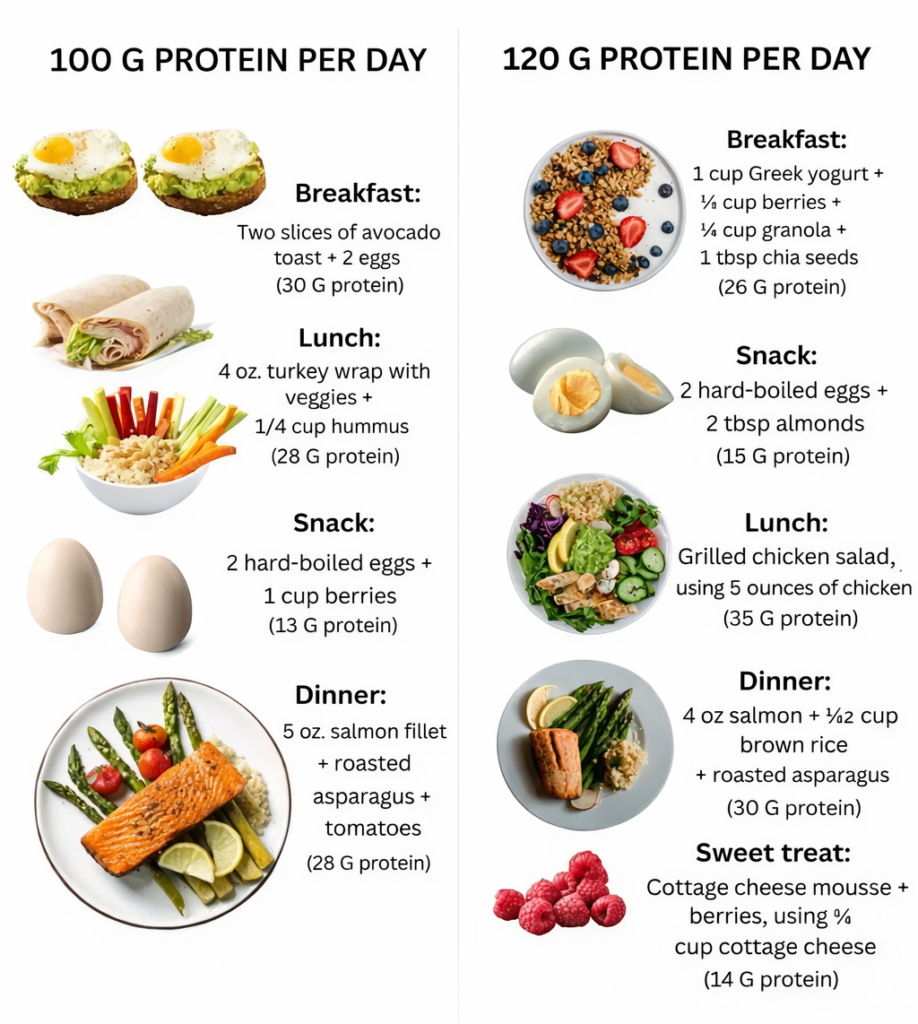
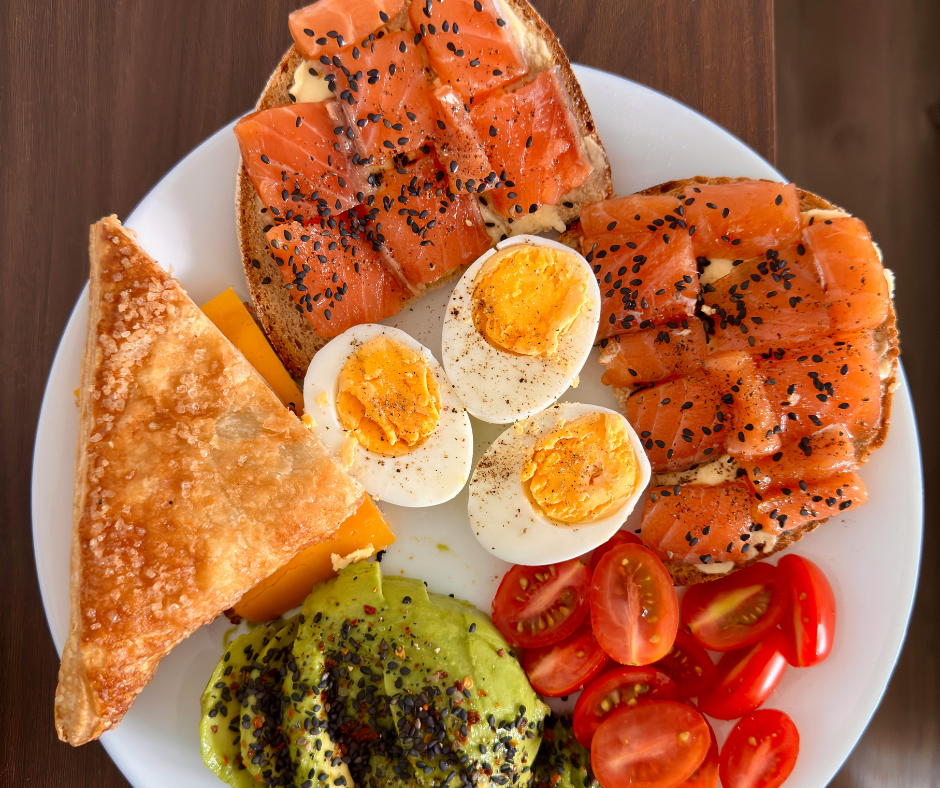
Reaching 100 grams of protein per day is often more achievable than it initially seems. Balanced meals that prioritize eggs, lean meats, fish, dairy, or plant-based protein sources can add up quickly when planned intentionally.
For women who are strength training, actively pursuing fat loss, or working to improve body composition, slightly higher protein intake can further support muscle maintenance and metabolic health.
Practical Ways to Increase Protein Intake
Increasing protein does not require drastic dietary changes. Small, consistent adjustments are often most effective.
Strategies we commonly recommend include:
- Starting the day with eggs, Greek yogurt, or a protein smoothie
- Building meals around a primary protein source first
- Choosing protein-forward snacks such as cottage cheese, beans (chick peas, edamame), nuts/seeds, or hard-boiled eggs, protein shake
- Planning ahead to ensure protein is available during busy days
These simple steps help women consistently meet protein needs for women over 35 without feeling restrictive or overwhelming.
While 100–120 grams per day is a helpful guideline, protein needs should always be individualized. Some women may require more based on strength training and body composition goals, while others may need slightly less depending on activity level and metabolic factors.
A personalized plan ensures protein intake supports both weight loss and long-term health sustainably.
Why Meeting Your Daily Protein Needs Matters for Women Over 35
For women over 35, especially during perimenopause, adequate protein intake is not just a trend – it is a key component of maintaining muscle, supporting metabolism, stabilizing energy, and promoting healthy aging.
Inside our weight loss and wellness programs, we help determine the right protein target for your body and provide practical strategies to help you reach it consistently and realistically. To start, book your consultation with us today.
Rejuvenate. Recharge. Redefine.
This information is for informational/educational purposes only and does not replace professional medical advice for your individual symptoms and is not intended to be used for diagnosis of a specific medical condition or treatment recommendation. Always consult your licensed healthcare provider for concerns about your health.